

Sydney’s Moth Migration: Why the 2026 Swarms Could Be Good News
Sydney’s skies, homes and gardens are suddenly full of moths, but behind the fluttering wings is an extraordinary story of migration, weather and wildlife. Rather than seeing the seasonal surge as a plague, there are reasons to appreciate this remarkable natural event — especially for the birds enjoying an unexpected feast.
If you have recently switched on your outdoor lights in Sydney only to find them surrounded by fluttering brown wings, you are certainly not alone. Across Sydney and parts of coastal New South Wales, an extraordinary influx of bogong moths has caught the attention of residents, with some describing the phenomenon as a plague. But while having unexpected visitors gathering around windows, doors and lights can be less than delightful, there is a much more fascinating story unfolding. These native Australian insects are undertaking an annual migration, and their arrival is creating a temporary banquet for birds and other wildlife. After years of worrying declines in bogong moth numbers, seeing so many of these remarkable travellers again may even offer a welcome glimmer of hope.
Not a plague, but a spectacular natural phenomenon
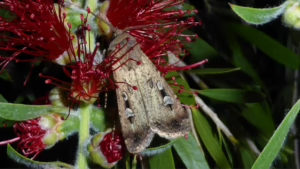
The sheer number of moths appearing across Sydney can certainly make the situation feel unusual. Yet mass insect movements are not necessarily signs of an infestation or an ecological disaster. In the case of the bogong moth, Agrotis infusa, large-scale migration is a natural part of its life cycle.
The bogong moth is a native Australian species famous for travelling hundreds of kilometres — sometimes more than 1,000 — between its breeding grounds inland and the cooler alpine regions of south-eastern Australia. Each spring, these small, dark-coloured moths head towards the Australian Alps, where they shelter from the summer heat in caves and rocky crevices.
This year’s influx is particularly noticeable because bogong moth populations have been dramatically reduced in recent years. The species was listed as endangered on the International Union for Conservation of Nature’s Red List in 2021, following a severe population crash associated with drought and other pressures. Researchers have welcomed the recent increase in sightings as an encouraging sign, although continued monitoring will be needed to determine what it means for the species’ longer-term recovery. https://www.abc.net.au/news/2026-10-07/nsw-why-there-are-so-many-bogong-moths-in-sydney/107233300
In other words, what looks like an invasion from our perspective may actually be a reminder of a natural spectacle that many Australians have not witnessed in such numbers for years.
Why are there suddenly so many moths this spring?
There is rarely one simple explanation for a sudden increase in insect activity. Weather, food availability, breeding success and migration conditions can all influence how many insects we see in a particular place and at a particular time.
Bogong moths breed across inland areas of Australia, including parts of New South Wales and southern Queensland. Their larvae develop in the soil, where suitable conditions and food sources can influence how many survive to adulthood. Rainfall can be especially important: when conditions favour plant growth and larval survival, more moths may emerge later in the year.
This spring, researchers have suggested that increased rainfall in some inland breeding areas, warmer conditions and favourable winds may all be contributing to the noticeable influx. However, scientists are still investigating the precise reasons behind this year’s numbers.
Importantly, the moths gathering around Sydney homes are not necessarily breeding in the city. Many are migrants passing through on their way to the mountains. Strong winds may push some closer to the coast or off their usual route, while artificial lights can attract and disorient moths once they reach built-up areas. https://www.abc.net.au/news/2026-09-28/bogong-moths-increase/107202604
It is a combination of natural movement and modern urban environments that helps explain why so many people are suddenly noticing them.

A remarkable journey powered by nature
One of the most extraordinary things about the bogong moth is its ability to navigate over long distances. These insects are not simply drifting aimlessly through the night. Research has shown that bogong moths can use celestial cues, including the night sky, as part of their navigation system.
Their destination is the Australian Alps, where they spend the warmer months in cool, sheltered spaces in a state of dormancy known as aestivation. Unlike hibernation, which is associated with winter, aestivation helps an animal endure hot or otherwise unfavourable conditions.
The moths later leave their alpine refuges and return towards breeding areas. Scientists are still working to understand the full complexity of their movements, but the migration is an extraordinary example of how even a small insect can be part of a much larger natural journey.
For a moth blown off course by strong winds or drawn towards city lights, Sydney may be an unintended stop along the way. That makes the current phenomenon more than a story about insects appearing in inconvenient places: it is a glimpse into the movement of wildlife across the Australian landscape.
The birds are having a field day
While some residents are busy brushing moths away from their doorways, local birds may be enjoying a very different experience.
For insect-eating birds, a sudden abundance of moths can mean a readily available food source. Instead of searching across gardens, parks and bushland for scattered insects, birds may find themselves with an unusually generous supply of prey in one place. Other animals also benefit from bogong moths, which are an important part of the alpine food web.
One of the best-known examples is the critically endangered mountain pygmy-possum, which relies heavily on bogong moths as a seasonal food source. The moths help support wildlife in the alpine ecosystem, making their migration important well beyond the places where people happen to see them.
The current influx does not mean every bird will suddenly thrive, nor does it guarantee that the moth population has fully recovered. But it does illustrate a simple ecological truth: insects are not merely background visitors in our environment. They are an essential link in the food chain, supporting the animals that depend on them.
If you spot birds swooping, pecking at moths or gathering around well-lit areas, you may be watching a small, everyday example of nature making the most of an unexpected feast.
We have seen spectacular moth events before
Although the current numbers may feel unprecedented to some Sydneysiders, large bogong moth movements are not new. Historical accounts describe enormous seasonal gatherings, with moths arriving in such numbers that they became a memorable feature of public life.
Researchers have pointed to previous mass appearances, including events around the Sydney Olympics in 2000 and the opening of Parliament House in Canberra in 1988. These examples help put the current situation into perspective: the species is capable of appearing in remarkable numbers, and people have been noticing these migrations for generations. https://www.abc.net.au/news/2026-09-28/bogong-moths-increase/107202604
There is also an important generational element to the story. When a species becomes much less common over a number of years, people can begin to regard its reduced numbers as normal. A sudden return to larger numbers may then seem extraordinary, even when it reflects a natural pattern that was once much more familiar.
For bogong moths, the recent declines have been serious and well documented. Their reappearance in greater numbers is therefore worth celebrating cautiously — not as proof that all is well, but as a reason to pay attention to the health of our native wildlife.
How to live alongside the moths
Of course, appreciating nature does not mean pretending that a house full of moths is everyone’s idea of fun. Fortunately, there are simple ways to manage their presence without harming them unnecessarily.
If moths are gathering around your home, consider turning off unnecessary outdoor lights and closing curtains near bright indoor lights. Artificial lighting can attract migrating insects, so reducing excess illumination may help limit the number gathering around windows and entrances.
If a moth makes its way inside, gently guide it outdoors or carefully catch and release it. Avoid spraying insecticides simply because the insects are numerous; the aim is to reduce unnecessary harm to native wildlife. The moths are temporary visitors, and their presence is not the same as a household infestation that damages fabrics or plants.
People interested in contributing to research can also record sightings through citizen-science projects such as Moth Tracker or iNaturalist. Photographs and observations can help researchers better understand where the moths are travelling and how their numbers change over time.
A little more wonder, a little less panic
It is entirely understandable to feel overwhelmed when moths seem to be everywhere. But perhaps this spring offers an opportunity to pause before labelling an unfamiliar natural event a plague.
The bogong moth’s story is one of migration, survival and the intricate connections between species. Weather patterns help shape its journey, the night sky guides its movements, and the insects themselves provide food for birds and other animals. Their numbers have suffered serious declines, making this year’s influx a reminder of how much we still have to learn about the wildlife sharing our environment.
The moths will not stay in Sydney forever. As their migration continues, the numbers gathering around homes and lights should change, although the timing will vary with local conditions.
Until then, there is another way to look at those fluttering wings: not simply as an inconvenience, but as a fleeting encounter with one of Australia’s remarkable native insects. And while we may not all be thrilled to share our doorways with them, the birds enjoying the banquet might just remind us that nature has its own reasons for showing up in numbers.