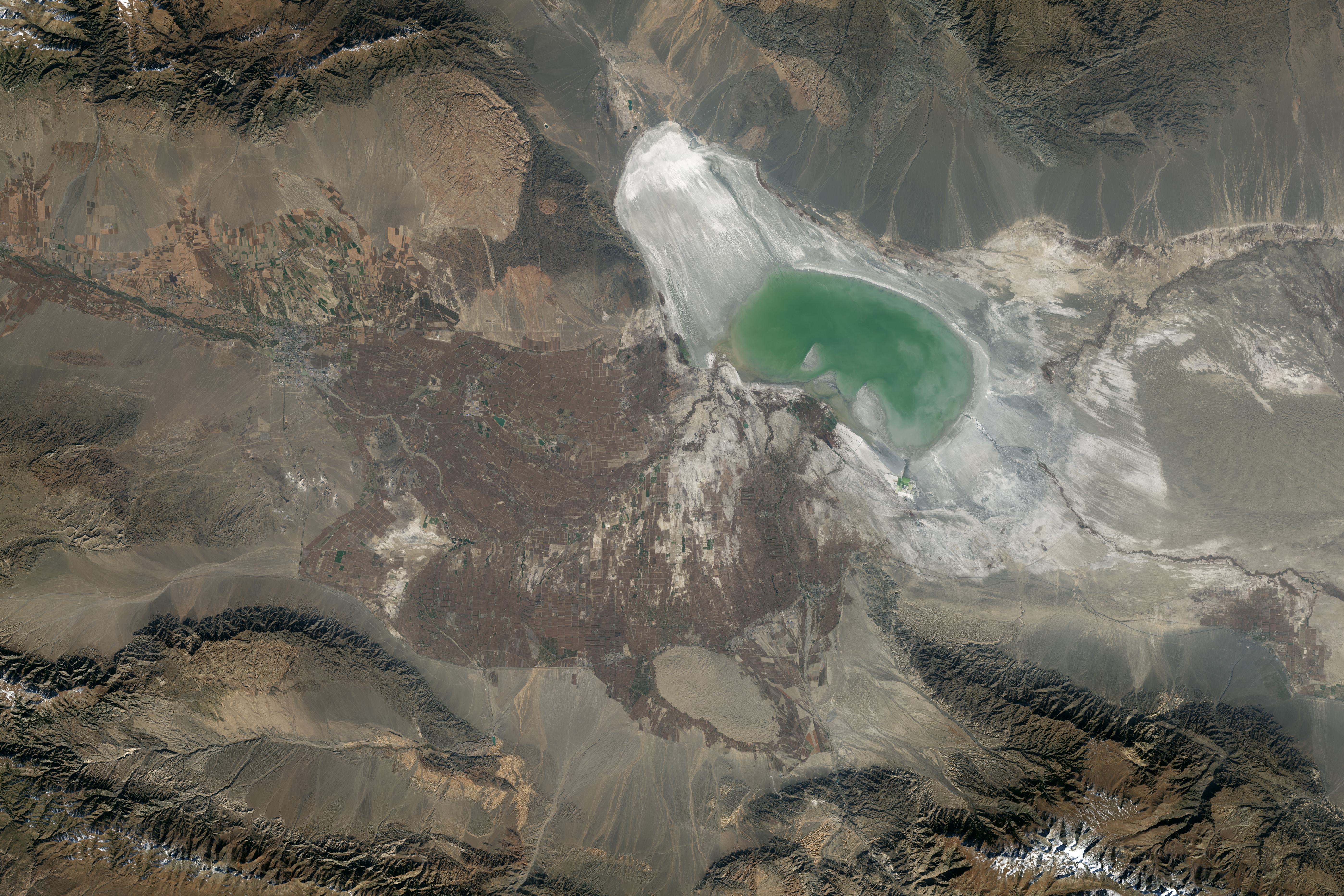
When it comes to inland surface water bodies, saline lakes are unique. They make up 44% of all lakes worldwide and are found on every continent including Antarctica. These lakes’ existence depends on a delicate balance between a river basin’s water input (precipitation and inflows) and output (evaporation and seepage).
The reason a lake turns saline is often because it doesn’t have a consistent stream outlet, leading to a build-up of dissolved salts from water inflows. The water levels of saline lakes are naturally unstable and these lakes are generally susceptible to any disturbance.
This heightened sensitivity makes saline lakes more responsive than freshwater lakes to natural and human-caused factors. The main cause of change in a saline lake is disturbances in its water balance. These can be the result of natural or human-induced factors that are local, such as droughts, pollution, and upstream water diversions, or global, such as climate change, decreasing precipitation and increasing temperature.
The rapid response of saline lakes to the changing conditions makes these lakes suitable candidates for reliably reflecting the regional, and potentially global, status of water resources, and revealing crucial changes in the water balance. Unsurprisingly, many of the world’s saline lakes are shrinking rapidly, a major warning about the sustainability of regional water resources.
How are saline lakes changing?
There have always been fluctuations in saline lakes. Unfortunately, more lasting changes have become more common in recent years due to regional human activities and global climate change.
Most lakes have been shrinking and their water quality has declined. In permafrost regions of the Arctic and the Tibetan Plateau, however, some salt lakes have expanded due to areas of ice melting in a warming climate.
Iran’s Lake Urmia is a good example. Until a few decades ago, Lake Urmia was one of the the world’s largest saline lakes, but it shrunk rapidly due to unsustainable human activities. The resulting problems include a decline in tourism, dust and salt storms, falling agricultural productivity and a loss of biodiversity.
The consequences have been disastrous. Despite many efforts, it has not been possible to restore the lake to its former glory.
Our natural early-warning systems
Saline lakes, much like the canaries used to give coalminers early warning of dangerously poor air quality, could play a vital role in monitoring the health of our water resources.
To better understand this analogy, we must first step back in time to the depths of underground mines where coalminers battled a hidden danger: carbon monoxide. This gas could build up silently, without any warning, endangering the miners’ lives.
Miners devised an ingenious solution: canaries. These small birds, with their rapid breathing rate, small size and fast metabolism, were tiny detectors of danger. When carbon monoxide levels rose, the canaries would be the first to show signs of distress, giving the miners a crucial warning to evacuate before it was too late.
The natural world continues to offer us unexpected insights. Saline lakes, with their intricate ecosystems and unique characteristics, act as nature’s early-warning systems.
Just as the canaries signalled hidden dangers in coalmines, the behaviour of saline lakes can alert us to looming issues with our water resources.
The bigger picture demands our attention
Of course, it is crucial to act when lakes are shrinking, whether through preservation efforts or restoration projects. But we must not overlook the bigger picture. It would be like a miner focusing on a distressed canary when it’s a sign of a more serious problem.
The real challenge lies in delving into the root cause, much like improving poor air quality in mines rather than merely trying to revive the birds.
This highlights the urgent need for a fundamental shift to water management and getting to the root of the problem rather than just dealing with the surface issues. Unfortunately, real-world experience shows we’ve often failed to make much of an impact when tackling these issues. But we can learn from our past mistakes to make better decisions now and in the future.
In the quest to ensure water resources remain sustainable, paying attention to saline lakes would be a good starting point. We need to grasp their intricacies and accurately gauge the water budget of these lakes around the world. We can only do that by investing in continuous monitoring of their health and behaviour.
The authors do not work for, consult, own shares in or receive funding from any company or organisation that would benefit from this article, and have disclosed no relevant affiliations beyond their academic appointment.
In the past few days, two well known survivors of the battle between marine mammals and vessels have been spotted in Australian waters. I’m talking about Bladerunner the humpback and Split Fin the killer whale. Both have become famous for the massive scars they bear on their bodies, inflicted by boats.
Bladerunner is marked by a series of lines across her back and part of her tail. These lines were made by a propeller in motion. Split Fin, as her name suggests, has a split dorsal fin – likely also caused by a boat propeller.
I’m lucky to have seen both during my career studying whales. I first saw Bladerunner in 2013 while conducting research off Cape Solander, Sydney. And I spotted Split Fin and her pod on a whale watching trip off Eden, New South Wales, back in 2009.
I get a buzz every time I hear about another sighting. I know countless other people feel the same way. But there’s another feeling, too, knowing they were hurt yet narrowly avoided a fate far worse. So let’s take this opportunity to learn a bit more about these majestic creatures and how to keep them safe from harm.
My first sighting of Split Fin (left), the well known killer whale with a split dorsal fin, in Australian waters, 2009.Vanessa Pirotta
What happened to Bladerunner and Split Fin?
Bladerunner and Split Fin sustained terrible injuries quite some time ago now. Bladerunner was struck in 2001 and Split Fin was first spotted in 2003. In both cases, the wounds healed without becoming infected.
Killer whales, such as Split Fin, are actually the largest members of the dolphin family. Whales and dolphins swim to the surface to breathe. They may also feed and socialise at the surface, where they’re highly likely to encounter a vessel.
A collision in the ocean is called vessel strike (sometimes ship strike or boat strike).
Unfortunately, whales and dolphins are at risk of vessel strike worldwide. In some cases, whales may be fatally wounded or sustain terrible injuries that restrict movement and leave them unable to swim properly. This makes them more vulnerable to predators such as killer whales.
Bladerunner and Split Fin look different, so people notice them
It’s impossible for scientists to be out on the ocean all the time, so it’s helpful when other people spot whales travelling on the “humpback highway”. For example:
Bladerunner was sighted by people onshore at Tathra, NSW, on Wednesday, and filmed using a drone :
Split Fin and her pod were spotted off Eden last week from a whale-watching platform:
Both humpback whales and killer whales can live for well over 50 years, so hopefully we can enjoy many more sightings.
Dedicated “citizen scientists” capture sightings on social media through groups such as Killer Whales Australia. There’s also various “whale-y” fun local projects, right around Australia, where you can get involved.
In addition, my team and I are documenting unique humpback whale sightings including the elusive white humpback whale Migaloo. Being all white makes him stand out, so people tend to notice him. But it’s been four years between sightings now. When will Migaloo turn up next?
A reminder to please keep your distance
Both Bladerunner and Split Fin remind us all to take care when on the water, or flying a drone over the ocean.
All whales, dolphins and porpoises in Australian waters are protected. The authorities have rules in place to keep these animals safe.
If you’re flying a drone, that means the drone must fly at least 100m or higher above the ocean’s surface.
Ensuring we don’t get too close will allow these creatures safe passage in our waters, so we can continue to enjoy them.
Of course, vessel strike is not the only threat whales and dolphins face. Human activities present other dangers such as entanglement in fishing gear, noise and other forms of pollution, climate changes, and underwater construction to name a few. The good news is science is helping us understand these threats, so we can make evidence-based decisions to better protect these creatures in the future.
Bladerunner is back!
Tail end
Bladerunner is one of more than 40,000 humpbacks currently migrating north to warmer waters from Antarctica. They’re on their way to a fun place I call the “whale disco”, where male humpback whales sing and socialise with females. Humpback females may give birth or fall pregnant during this time.
It’s a special time of year, when all eyes are on the big blue.
Let’s hope for safe passage for all whales and dolphins, as they enjoy Australian waters.
Vanessa Pirotta does not work for, consult, own shares in or receive funding from any company or organisation that would benefit from this article, and has disclosed no relevant affiliations beyond their academic appointment.
In the past few days, two well known survivors of the battle between marine mammals and vessels have been spotted in Australian waters. I’m talking about Bladerunner the humpback and Split Fin the killer whale. Both have become famous for the massive scars they bear on their bodies, inflicted by boats.
Bladerunner is marked by a series of lines across her back and part of her tail. These lines were made by a propeller in motion. Spilt Fin, as her name suggests, has a split dorsal fin – likely also caused by a boat propeller.
I’m lucky to have seen both during my career studying whales. I first saw Bladerunner in 2013 while conducting research off Cape Solander, Sydney. And I spotted Spilt Fin and her pod on a whale watching trip off Eden, New South Wales, back in 2009.
I get a buzz every time I hear about another sighting. I know countless other people feel the same way. But there’s another feeling, too, knowing they were hurt yet narrowly avoided a fate far worse. So let’s take this opportunity to learn a bit more about these majestic creatures and how to keep them safe from harm.
My first sighting of Split Fin (left), the well known killer whale with a split dorsal fin, in Australian waters, 2009.Vanessa Pirotta
What happened to Bladerunner and Split Fin?
Bladerunner and Split Fin sustained terrible injuries quite some time ago now. Bladerunner was struck in 2001 and Spit Fin was first spotted in 2003. In both cases, the wounds healed without becoming infected.
Killer whales, such as Split Fin, are actually the largest members of the dolphin family. Whales and dolphins swim to the surface to breathe. They may also feed and socialise at the surface, where they’re highly likely to encounter a vessel.
A collision in the ocean is called vessel strike (sometimes ship strike or boat strike).
Unfortunately, whales and dolphins are at risk of vessel strike worldwide. In some cases, whales may be fatally wounded or sustain terrible injuries that restrict movement and leave them unable to swim properly. This makes them more vulnerable to predators such as killer whales.
Bladerunner and Split Fin look different, so people notice them
It’s impossible for scientists to be out on the ocean all the time, so it’s helpful when other people spot whales travelling on the “humpback highway”. For example:
Bladerunner was sighted by people onshore at Tathra, NSW, on Wednesday, and filmed using a drone :
Split Fin and her pod were spotted off Eden last week from a whale-watching platform:
Both humpback whales and killer whales can live for well over 50 years, so hopefully we can enjoy many more sightings.
Dedicated “citizen scientists” capture sightings on social media through groups such as Killer Whales Australia. There’s also various “whale-y” fun local projects, right around Australia, where you can get involved.
In addition, my team and I are documenting unique humpback whale sightings including the elusive white humpback whale Migaloo. Being all white makes him stand out, so people tend to notice him. But it’s been four years between sightings now. When will Migaloo turn up next?
A reminder to please keep your distance
Both Bladerunner and Split Fin remind us all to take care when on the water, or flying a drone over the ocean.
All whales, dolphins and porpoises in Australian waters are protected. The authorities have rules in place to keep these animals safe.
If you’re flying a drone, that means the drone must fly at least 100m or higher above the ocean’s surface.
Ensuring we don’t get too close will allow these creatures safe passage in our waters, so we can continue to enjoy them.
Of course, vessel strike is not the only threat whales and dolphins face. Human activities present other dangers such as entanglement in fishing gear, noise and other forms of pollution, climate changes, and underwater construction to name a few. The good news is science is helping us understand these threats, so we can make evidence-based decisions to better protect these creatures in the future.
Bladerunner is back!
Tail end
Bladerunner is one of more than 40,000 humpbacks currently migrating north to warmer waters from Antarctica. They’re on their way to a fun place I call the “whale disco”, where male humpback whales sing and socialise with females. Humpback females may give birth or fall pregnant during this time.
It’s a special time of year, when all eyes are on the big blue.
Let’s hope for safe passage for all whales and dolphins, as they enjoy Australian waters.
Vanessa Pirotta does not work for, consult, own shares in or receive funding from any company or organisation that would benefit from this article, and has disclosed no relevant affiliations beyond their academic appointment.
Australian scientists create brick refuges in greenhouses to help green and golden bell frogs survive infection
A “sauna” treatment for frogs has been used by researchers in Australia to successfully fight a deadly fungal disease that has devastated amphibians around the world, according to a new study.
Scientists created refuges for the animals using painted masonry bricks inside greenhouses that they called “frog saunas”. They found that endangered Australian green and golden bell frogs were able to clear infections from the deadly Batrachochytrium dendrobatidis fungus, in the warmer conditions of the greenhouses, when they would otherwise have died. Many of the frogs that recovered in the refuges were then resistant to infection.
Earlier this week, a “handover report” into Greyhound Racing NSW alleged poor animal welfare. Now an independent inquiry will look into the state’s racing body.